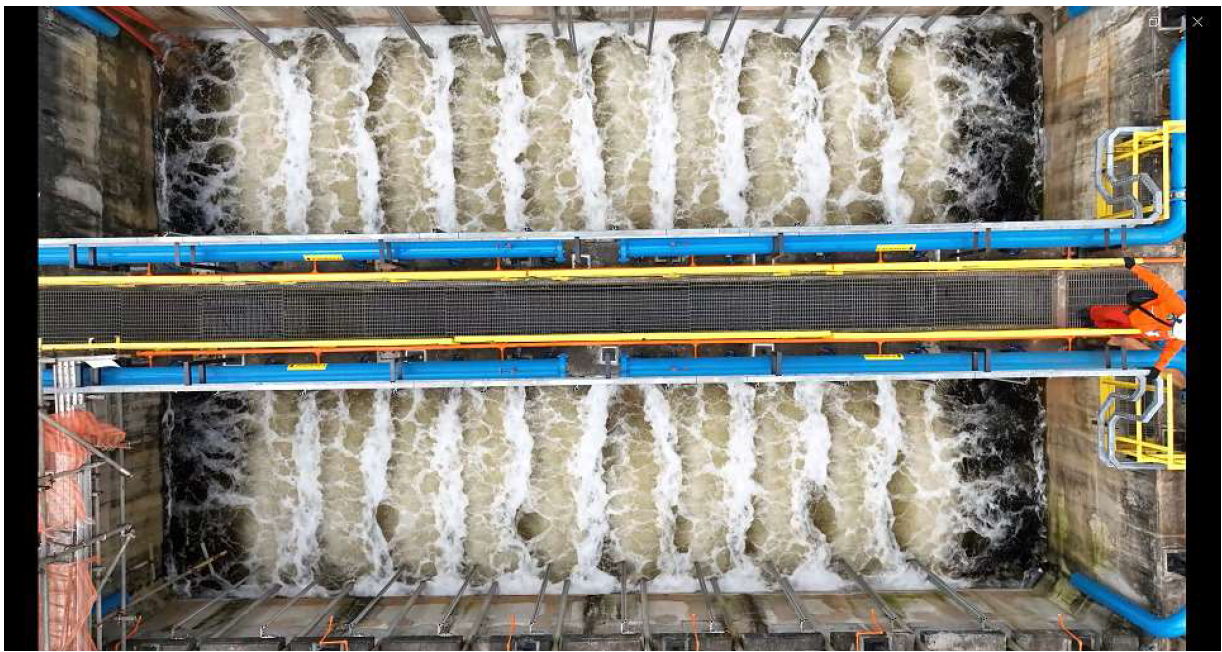
P Plant, Brazil

For refinery wastewater, compliance is only part of the story. The treatment solution also has to perform reliably at an industrial scale and support environmental targets without creating unnecessary operating burden. This project shows how Kubota MBR technology with gravity filtration was selected to help meet demanding treatment requirements in a petrochemical application.
Project snapshot
- Industry: Oil & Gas – Refinery
- Capacity: 14,400 m³/day
- Influent: refinery wastewater
- Start-up: 2015
- Gravity filtration is applied for permeate extraction, helping significantly reduce energy consumption compared with membrane filtration pumps
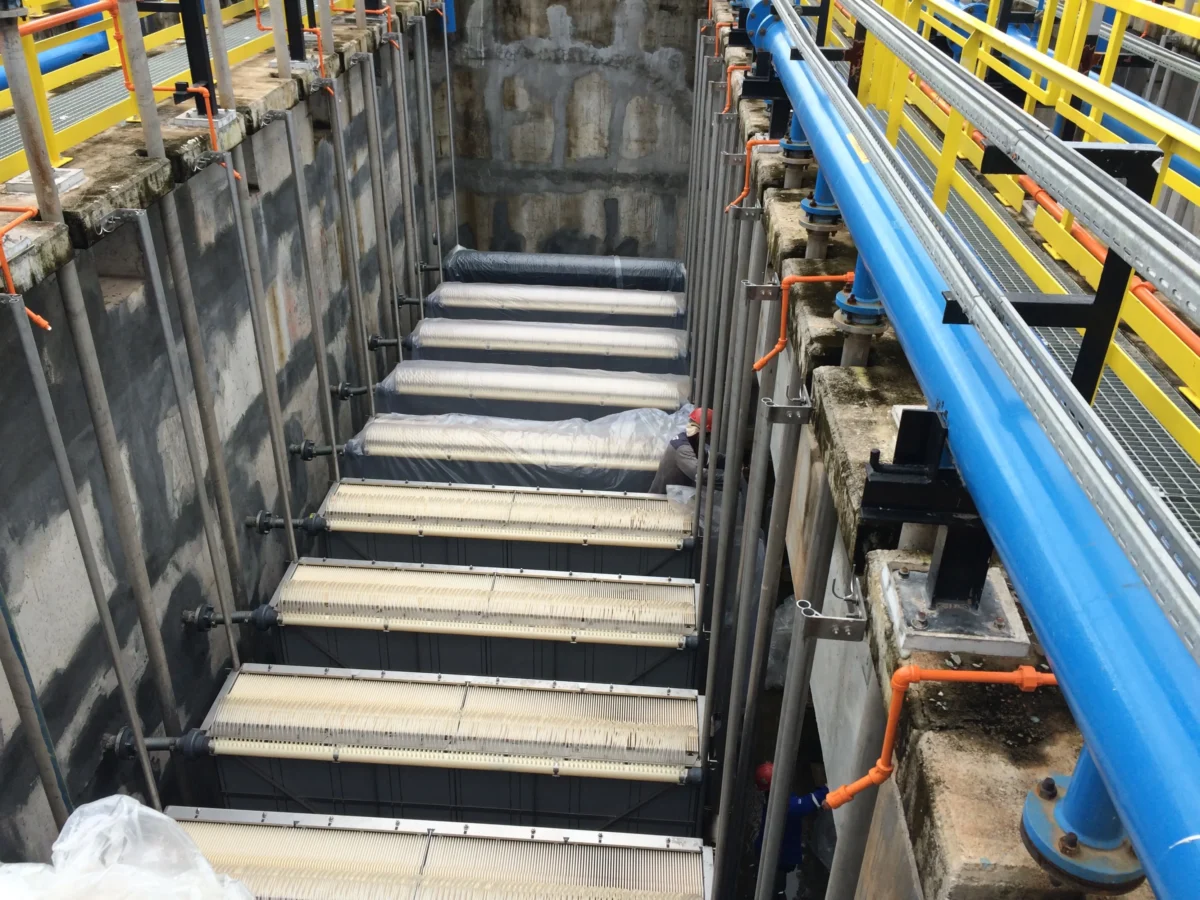
- Kubota’s rigid flat sheet membranes were selected after a 5-year pilot test in which another flexible flat sheet membrane supplier was also evaluated.
Why was the plant upgraded?
The plant needed a treatment approach that could meet demanding performance expectations while aligning with a higher environmental standard. Key drivers included meeting world-class treatment guidelines, selecting a technology aligned with environmental performance goals, choosing a solution proven through long-term pilot testing, and keeping energy consumption as low as possible.
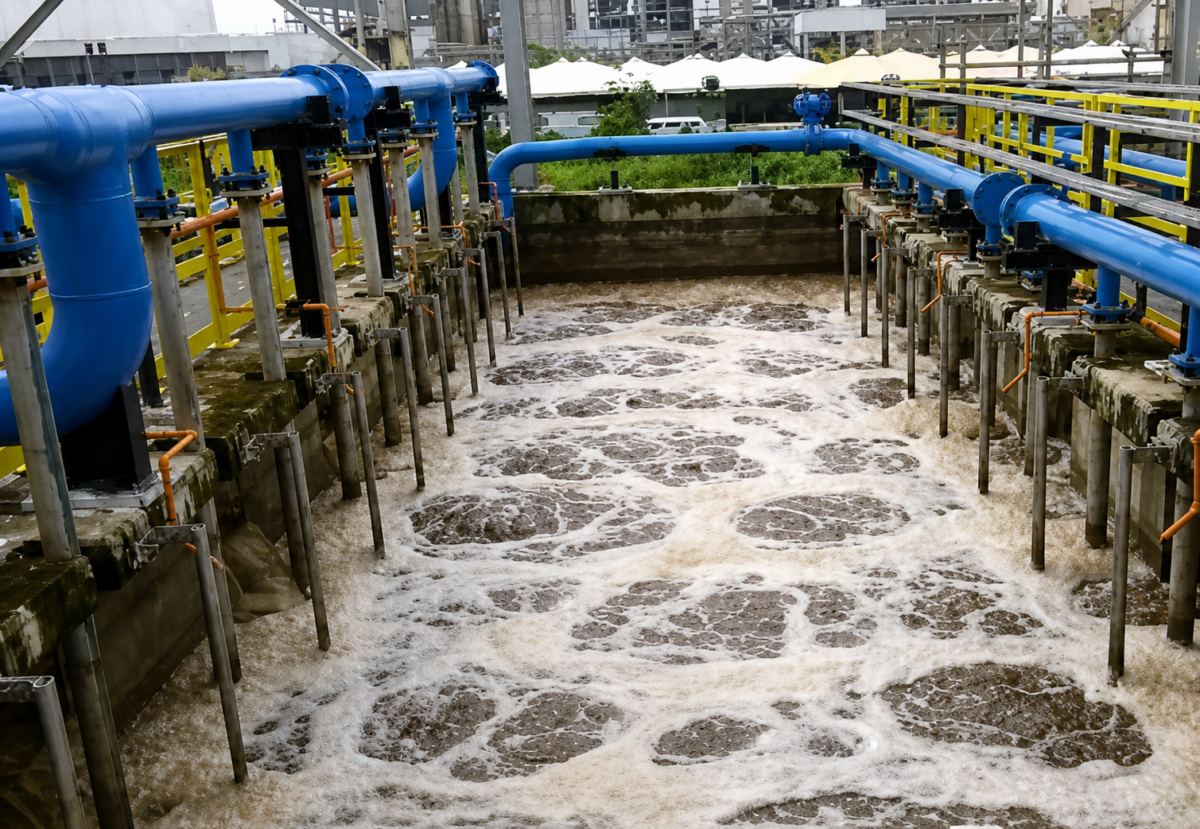
The challenge
Refinery wastewater is a demanding stream to treat, especially at this scale. The challenge was to treat this tough wastewater with a technology that had already been proven in real operating conditions, while assuring compliance with strict environmental discharge standards and keeping energy consumption as low as possible.
In this case, Kubota’s rigid flat sheet MBR technology was selected over another flexible flat sheet MBR technology, combining treatment reliability with a lower energy permeate extraction concept.
The solution
Kubota provided an MBR-based treatment solution using gravity filtration. At this scale, gravity filtration is particularly valuable because it supports permeate extraction without relying on large continuously operating self-priming pumps. That helps create a more energy-conscious operating concept while still delivering the treatment quality expected from MBR.
The selection, after a 5-year pilot period, also adds an important layer of confidence. It shows that the final decision was based on demonstrated long-term suitability, not only on theoretical design performance.
Outcome
The project combined large-scale industrial treatment with strong effluent performance.
Key outcomes include:
- Capacity of 14,400 m³/day
- Gravity filtration is applied to keep energy consumption as low as possible
- Kubota selected after a 5-year pilot test
- BOD5 reduced from 320 mg/L to 5 mg/L
- COD reduced from 1,500 mg/L to 60 mg/L
- Total nitrogen reduced from 90 mg/L to 20 mg/L
- Phenols reduced from 60 mg/L to 0.5 mg/L
- Oils & greases from 1 mg/L to 2 mg/L.
What does this mean for similar plants?
For refinery and petrochemical sites, this project shows that Kubota MBR can support demanding industrial treatment goals at meaningful scale while meeting stringent environmental discharge standards. It also shows the value of gravity filtration as an alternative permeate extraction method when low energy use and easier operating practicality matter just as much as final effluent quality.
On your side
On your side, when refinery wastewater has to meet stricter standards without compromising on energy use.
![C Company – Chile [industrial]](https://onyourside.kubota-mbr.com/app/uploads/2026/04/MBR-tank-2.png)
![I Dyeing Plant – India [industrial]](https://onyourside.kubota-mbr.com/app/uploads/2026/04/MBR-tank.png)
![N Plant – Japan [municipal]](https://onyourside.kubota-mbr.com/app/uploads/2026/04/Nakahama2-800x439.webp)
![Al Plant – Oman [municipal]](https://onyourside.kubota-mbr.com/app/uploads/2026/04/Al-Ansab-Reference-800x600.webp)
![C Plant – USA [municipal]](https://onyourside.kubota-mbr.com/app/uploads/2026/04/C-Plant-USA-MBR-Tank.png)
![EJ Plant – Spain [municipal]](https://onyourside.kubota-mbr.com/app/uploads/2026/04/Permeate-pipe-Guide-pipe-Air-pipe-800x1067.jpg)
![S Plant – Spain [municipal]](https://onyourside.kubota-mbr.com/app/uploads/2026/04/image-1.png)