
Upgrading an existing activated sludge plant with MBR technology
Reference Case
S Plant, Spain
When an existing municipal wastewater treatment plant needs to treat higher flows and meet tighter discharge standards, conventional expansion can quickly become expensive due to the need for larger biological volumes. This case shows how Kubota MBR technology can help increase performance within the existing site and make better use of installed infrastructure.
Project snapshot
- Capacity: 35,000 m3/day
- Influent: municipal wastewater
- Start-up: 2010
- Expansion of a conventional activated sludge process with MBR technology
Lifespan of first membrane cartridges: 10 years
Why was the plant upgraded?
The plant needed to achieve several goals at the same time:
- Increase treatment capacity
- Improve effluent quality
- Comply with nutrient removal requirements
- Continue using the existing tanks
- Avoid major new civil works due to limited available space
This made upgrading a more attractive route than moving straight to a completely new build.
The challenge
The challenge was to increase treatment capacity within the existing civil works while ensuring compliance with more stringent nutrient discharge standards.
This required a solution that could deliver higher performance without major new construction or full reconstruction of the plant.
The solution
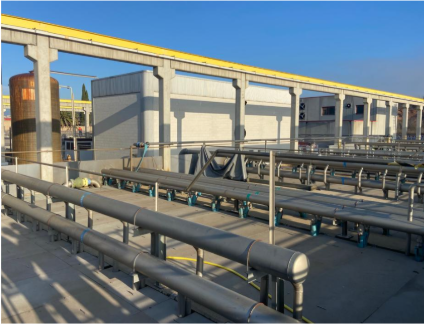
Kubota provided an MBR-based upgrade that allowed the plant to increase performance while continuing to use the installed tanks. These were converted into combined aeration-membrane tanks by installing the membrane units in the existing biological reactors.
The solution was not simply about adding separate membrane tanks. It was about using the existing bioreactors, installing membrane units in them, and turning them into combined aeration-membrane tanks. This created a practical upgrade path to higher capacity and better treated water quality while protecting the value of the existing asset base.
Outcome
The upgraded plant is reported at 35,000 m3/day and is linked to improved effluent quality and compliance with nutrient removal requirements.
Additional reported outcomes include:
- Membrane cartridges replaced after 10 years of service life
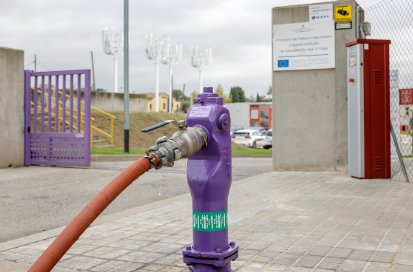
- 150,000 m3 of water reused annually from MBR permeate
- Reuse applications, including street cleaning, dual water network supply, toilet cisterns, and floor cleaning in industrial buildings
What does this mean for similar plants?
This is a useful example for utilities that need more performance without immediately committing to a major rebuild. It shows that an existing plant can be upgraded to increase capacity, improve water quality, and support reuse, all within the logic of the infrastructure already in place.
On your side
On your side, when your wastewater treatment plant has reached its capacity.
Browse our other case studies
![C Company – Chile [industrial]](https://onyourside.kubota-mbr.com/app/uploads/2026/04/MBR-tank-2.png)
![P Plant – Brazil [industrial]](https://onyourside.kubota-mbr.com/app/uploads/2026/04/P-Plant_Brazil_2-800x427.webp)
![I Dyeing Plant – India [industrial]](https://onyourside.kubota-mbr.com/app/uploads/2026/04/MBR-tank.png)
![N Plant – Japan [municipal]](https://onyourside.kubota-mbr.com/app/uploads/2026/04/Nakahama2-800x439.webp)
![Al Plant – Oman [municipal]](https://onyourside.kubota-mbr.com/app/uploads/2026/04/Al-Ansab-Reference-800x600.webp)
![C Plant – USA [municipal]](https://onyourside.kubota-mbr.com/app/uploads/2026/04/C-Plant-USA-MBR-Tank.png)
![EJ Plant – Spain [municipal]](https://onyourside.kubota-mbr.com/app/uploads/2026/04/Permeate-pipe-Guide-pipe-Air-pipe-800x1067.jpg)
1|7